
Guadalupe County Blotter Status
Guadalupe County publishes no 72-hour, weekly, or other multi-day blotter. The sheriff and county navigation offer no public log either. There is no verified URL. There is no update schedule, roll-off rule, query form, or photo policy to describe. Any claim that the log refreshes on a certain day would simply be invented.
That absence differs from a delayed page. No public interface exists. So posting delay cannot be tested. The underlying records may still sit with the arresting agency, a detention custodian, or the court. In practice, you build a multi-day record by naming a date span. Then ask the right custodian for its chronological arrest and booking entries.
The official county home page is the natural first stop. Its general county-record links cover other county functions. None amount to a jail or police blotter.
Build a Guadalupe Arrest Log
Start with the time span and the jurisdiction. Santa Rosa Police, Vaughn Municipal Police, the Guadalupe County Sheriff's Office, or New Mexico State Police may create the arrest-side record. A detention custodian may keep a separate booking record. One arrest can therefore carry more than one record number and more than one responsible office.
- Set an exact beginning and ending date, including times if the request spans a weekend or holiday.
- Identify each likely arresting agency and ask for its original chronological blotter or arrest entries for that period.
- Ask the sheriff which office currently holds Guadalupe County Detention Center booking sheets and release entries.
- Request the booking number, arresting agency, booked time, charges as entered, release or hold notation, and receiving facility.
- Compare the result with the court register for later filings and disposition, while respecting public-access limits.
Keep arrest date, booking date, and article date in separate columns. An arrest late at night may be booked the next day. A newsroom may report it later still. That distinction keeps a selected article from masquerading as a complete daily log.
Need an immediate custody answer? Use the Arrests Last 24 Hours process instead. The blotter route suits a broader span and a reproducible set of dated entries.
Note: Request agency and county booking numbers together because they can refer to separate records created during the same event.
Fields in a Guadalupe Blotter
Guadalupe County displays no standard booking-record columns online. So the table below is a request checklist, not a live feed. It reflects what a booking record typically holds. Ask the custodian which fields are kept and which can be released.
| Requested field | How to read it |
|---|---|
| Name and identifiers | Use spelling plus another identifier to avoid a false match. |
| Arrest date and place | Marks the event, which can precede the booking time. |
| Arresting agency | Points to the office that may hold the incident report. |
| Booking number and time | Connects the event to the detention intake record. |
| Charges as booked | Lists charges entered at intake, not final court findings. |
| Bond or hold notation | Records a release condition or custody basis at that time. |
| Release or transfer entry | Shows movement out of the recorded county status. |
| Photograph status | Shows whether an image is maintained or releasable, if confirmed. |
A missing field should stay missing. Never fill it from an unrelated county, a Texas page sharing the county name, or an unofficial listing. A missing photo proves nothing either. It only means the source does not display or release one.
Charges can change after booking. A prosecutor may file different counts, and a court may dismiss others. The blotter preserves an early snapshot. For the final outcome, the court docket is the better source.
Weekend Records Need Date Bounds
No official source documents a Guadalupe County weekend surge, Monday catch-up cycle, holiday delay, or batch-posting schedule. Those patterns cannot be borrowed from larger counties. Instead, frame the request wide enough to capture bookings that cross midnight or finish after the chosen cutoff.
For a weekend inquiry, name both the arrest window and the booking window. Ask if late-processed entries get included. If the first response omits a late booking, send a follow-up tied to the same person, dates, and incident number. Do not ask for everything again. A narrow follow-up moves faster.
Holidays work the same way. The county posts no schedule, so a bounded request gives the custodian a clear task instead of a vague one. That beats an undated ask like "send the recent arrests."
News Is Not the Arrest Log
Local and regional reporting can verify a particular arrest. It cannot deliver an exhaustive list. The Eastern New Mexico News Guadalupe County Communicator archive holds community and public-safety material, though it carries no current daily Guadalupe County jail log.
The archive's layout appears on its official page:
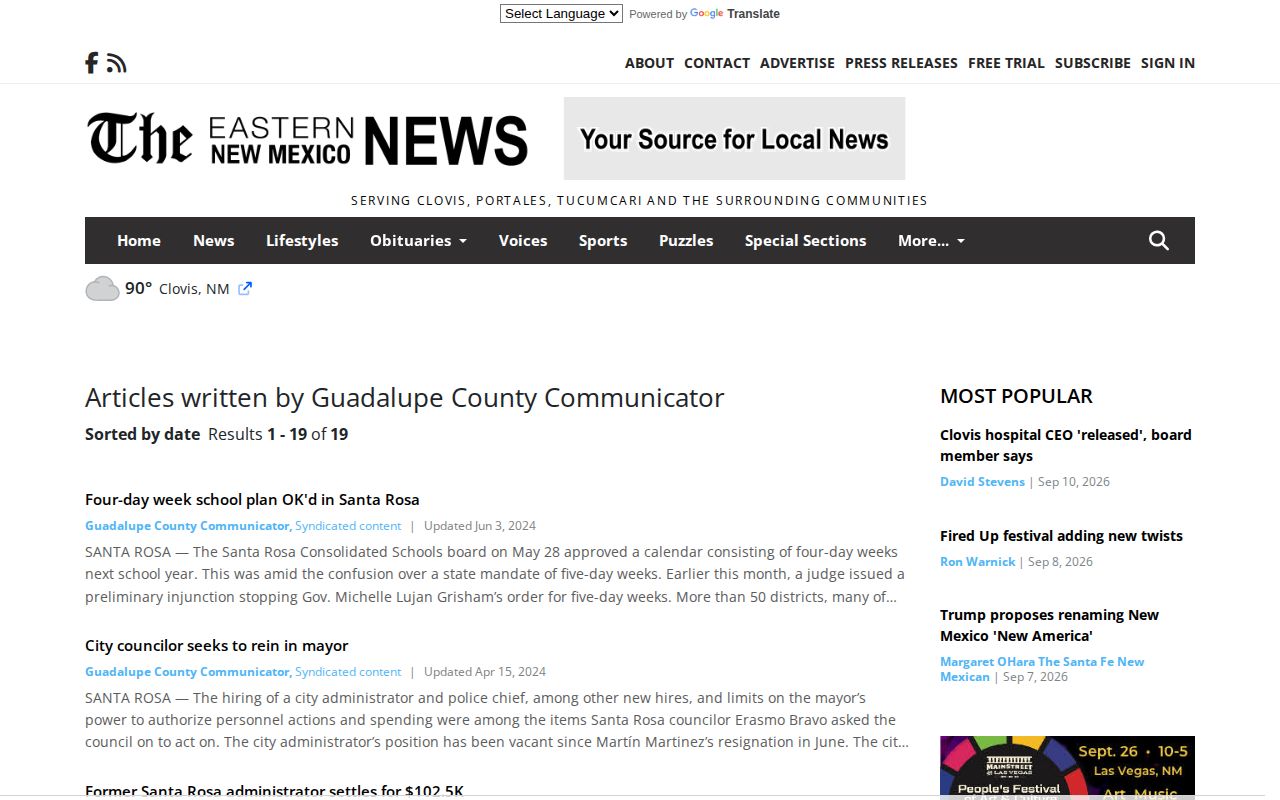
Search its stories by place, agency, and date. Then check each against the official release or record. One search result labeled "Jail log" actually concerned Quay County, not Guadalupe County. That is a clear warning. Verify the county, facility, and arresting agency on every item, and never treat an article date as an arrest or booking timestamp.
Note: Regional archives select stories for news value, so silence in an archive is never proof that no booking occurred.
Santa Rosa Arrest Coverage
KOB and KRWG each reported a serious Santa Rosa arrest, drawing on state-police information. The reports point to a historical booking destination, the Guadalupe County Detention Center, and show how custody can span agencies. That path is not guaranteed today. Nor do they create a recurring blotter.
The KOB report is still on the station's site.
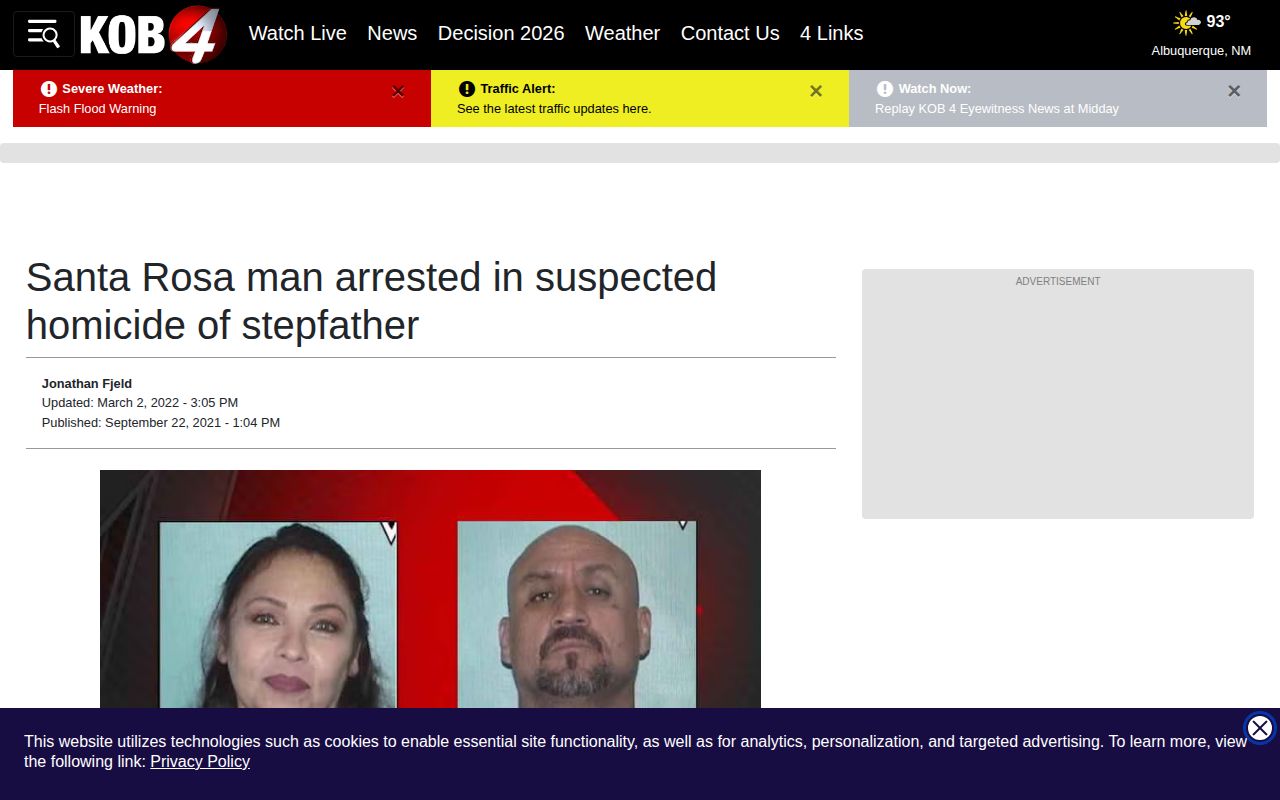
The article works best as selected event coverage rather than a records source. One example: the KRWG regional report covers a single sourced Santa Rosa arrest incident in full.
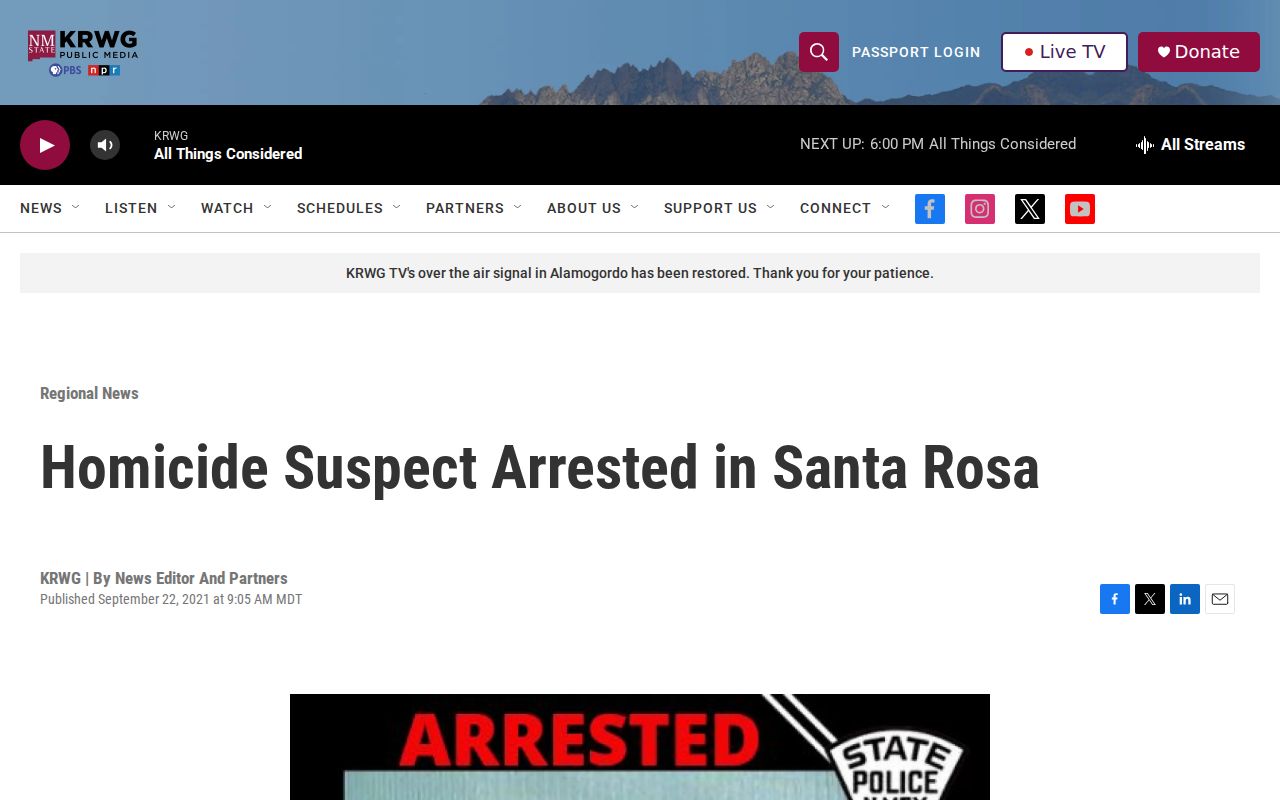
Line both reports up with the originating agency release. That separates a republished narrative from the official arrest and booking fields. The order matters. Agency release first, booking record second, court docket for later case action, and selected news only for context.
Older Guadalupe Arrest Records
No fixed roll-off date governs a public arrest log. "Older" is not defined by an online window. New Mexico's retention rule keeps closed jail inmate case files for ten years after the file closes. Destruction follows. Older schedules used different periods. So a record's creation date and governing schedule matter before assuming a Guadalupe County booking file still exists.
Start with the detention custodian and a named request. Give the full name, any known aliases, and a date range. Add the arresting agency, the possible facility, and a booking or case number. Ask for the booking sheet and the release entry. Ask for the booking photo if it is maintained and releasable. Request any index that identifies a transferred file too. If the office no longer holds the record, ask when it was destroyed or where it went.
The New Mexico retention rule sets minimum schedules only. It does not promise a public web log stays online. Older government collections may sit with the State Records Center and Archives. An archive search is a separate path from current detention custody.
- Blotter
- A chronological police record of events or arrests.
- Booking sheet
- The detention intake record created when a person is received.
- Disposition
- The court’s later recorded outcome, not the booking charge.
- Retention
- The rule governing how long an office keeps a record.
Third-party arrest sites are not official archives. Pages can sit stale, incomplete, or wrongly matched. Some paths simply fail. Busted Newspaper shows an unavailable Guadalupe County section, RecentlyBooked's usual county address returns a gone response, and broad indexes carry no valid New Mexico county listing. For dependable answers, the Guadalupe County recent arrests hub explains how an older booking sheet, a court record, and a state custody record each answer different questions.
Note: Ask for a transfer or destruction date when the custodian cannot produce an older file, then preserve that written response.